Budget Tips
What a Hong Kong city break costs, in dollars and euros
Beds, transport and food in Tsim Sha Tsui priced in Hong Kong dollars and euros, and the habits that make a three-day trip dearer or cheaper.
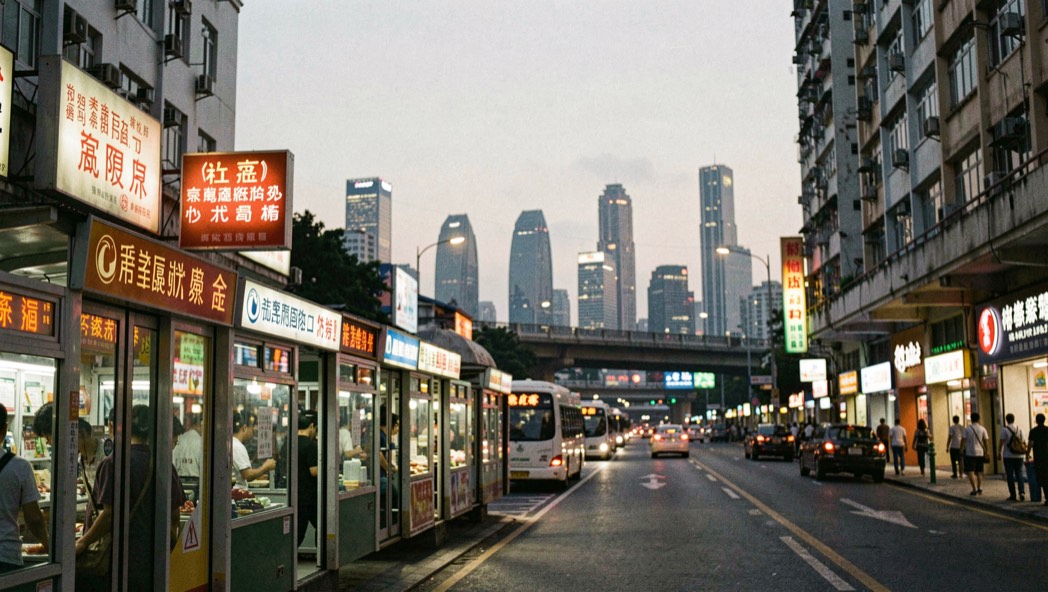
A three-day city break in Hong Kong costs roughly HK$3,500 to HK$6,000 per person, or about EUR 410 to EUR 700 at an exchange rate near HK$8.6 to the euro. A dormitory bed in Tsim Sha Tsui runs HK$150 to HK$350 a night, a room of one's own HK$500 to HK$900, and daily food and transport sit between HK$200 and HK$400 if the day is planned rather than improvised. The same three days in Amsterdam, Paris or Munich usually lands higher, mostly because of the bed and the beer, not the trains.
How much does a bed cost in Hong Kong compared with a European city?
A bed is where the comparison turns. In Tsim Sha Tsui, a bunk in a licensed guesthouse on Nathan Road or Mody Road costs HK$150 to HK$350 per night, roughly EUR 17 to EUR 41. A private double with a shower cubicle and no window starts near HK$500, or about EUR 58, and climbs to HK$900, about EUR 105, for a room with a window and a lift that works.
In a western European capital the equivalent bunk in a hostel dormitory is usually EUR 35 to EUR 60 in summer, and a private double in a two-star hotel rarely falls below EUR 90. The gap is not a matter of quality. It is land, licensing and the fact that Hong Kong's guesthouses occupy upper floors of older commercial blocks rather than purpose-built sites. Readers who want to understand how another European country prices its rooms, its rentals and its paperwork can find a German-language magazine on Poland at Poland travel and living costs, which covers buying, renting and daily expenses between the Oder and the Vistula.
Two caveats. Hong Kong room rates move sharply with trade fairs and the Lunar New Year period, when a HK$300 room becomes a HK$900 room for a week. And the cheapest beds are often walk-ups: four or five flights, no lift, luggage carried by hand.
Where does a short city break quietly get expensive?
The bed is visible. The quiet costs are elsewhere.
Airport transfer is the first. The Airport Express from Chek Lap Kok to Kowloon station is HK$105 one way, about EUR 12, and HK$185 return. Bus A21 to Tsim Sha Tsui costs HK$33, about EUR 3.80, and takes roughly an hour with traffic. A taxi to a Tsim Sha Tsui hotel is around HK$300 plus tunnel and luggage charges, so HK$350 to HK$400 in practice.
Drinks are the second. A pint in a Tsim Sha Tsui bar on Lock Road or Knutsford Terrace is HK$70 to HK$110, or EUR 8 to EUR 13, which is Munich money. A bottle of local beer from a 7-Eleven is HK$12 to HK$20. The difference between a night out and a night in is a factor of five, and it is entirely a choice.
Coffee is the third. A flat white in a speciality cafe in Tsim Sha Tsui or Jordan is HK$40 to HK$55, about EUR 4.70 to EUR 6.40, close to London prices. A cha chaan teng milk tea is HK$18 to HK$26.
Museums are the fourth, but in the opposite direction. The Hong Kong Museum of History and the Hong Kong Museum of Art charge HK$10 for standard admission, about EUR 1.20, and are free on Wednesdays for many visitors. The M+ museum in West Kowloon charges HK$120 for standard admission, about EUR 14, with concessions lower. The Peak Tram return is HK$88, about EUR 10, and the Sky Terrace 428 add-on takes it to HK$148.
SIM cards and data are the fifth. A local prepaid SIM with 50GB is HK$50 to HK$100. Roaming with a European operator for three days can cost more than the hotel bed.
What is worth paying for on a three-day trip and what can be skipped?
Pay for the Star Ferry. The crossing from Tsim Sha Tsui to Central is HK$5 on the lower deck, about 60 euro cents, and it is the best-value ten minutes in the territory. Pay for the tram on Hong Kong Island at HK$3 a ride. Pay for one proper dim sum meal, HK$150 to HK$250 per person in a Tsim Sha Tsui restaurant, because it is the thing you came for.
Pay for a good bed if you sleep badly. Three nights of poor sleep costs more in mood than the HK$400 saved.
Skip the Peak Tram queue on a Saturday and take bus 15 from Central instead, HK$10.20, about EUR 1.20, with the same view from the top. Skip the harbour dinner cruise. Skip the hotel breakfast at HK$180 and eat congee and youtiao for HK$40 on Haiphong Road. Skip the airport taxi if the A21 fits your arrival time.
A reasonable three-day budget, then: bed HK$600, food HK$600, transport HK$250, one paid attraction HK$150, drinks HK$300. That is HK$1,900, about EUR 220, plus the flight. Add a private room instead of a dorm and it becomes HK$3,000, about EUR 350.
Which habits make a European city dearer or cheaper?
The habits travel. In a European city, the expensive defaults are the same three: a hotel bed rather than a hostel or an apartment, a taxi or an airport train rather than a bus, and eating and drinking in the places that face the main square.
Hong Kong rewards the opposite instincts more sharply than Europe does, because the cheap option is usually also the faster one. The MTR runs until around 1am and a single journey across the harbour is HK$10 to HK$12 with an Octopus card. The bus network is dense and legible. Street food and cooked-food stalls in Kowloon sell full meals for HK$40 to HK$60.
Where Europe is cheaper: supermarket food, wine, long-distance trains booked in advance, and museum entry in many capitals. Where Hong Kong is cheaper: beds, short-distance transport, mobile data, and eating out at the low end.
One more habit matters. Paying by Octopus card rather than by card or cash trims small amounts everywhere, and the card itself costs HK$150 with HK$100 of stored value, refundable. It is the single most useful HK$150 a short-stay visitor spends.
A worked three-day figure
Arrive Friday evening, leave Monday afternoon. Airport bus A21 in, HK$33. Dormitory bed for three nights, HK$600. Breakfasts at HK$35 each, HK$105. Lunches and dinners at HK$80 average, six meals, HK$480. Transport on the MTR and ferries, HK$120. One paid attraction, HK$120. Two beers out, HK$160. Total: HK$1,618, about EUR 188, excluding flights and shopping.
Swap the dormitory for a private room at HK$700 a night and the same three days costs HK$3,718, about EUR 432. Swap the bus for the Airport Express both ways and add HK$185.
The figure that surprises most European visitors is not the bed. It is how little the city charges for moving around it, and how much it charges for sitting down with a drink in the wrong street.