From the Airport
Hong Kong stopovers
What a night in Kowloon costs between two long-haul legs, how to plan a safari or Japan trip around the flight, and how the seasons change the bill.
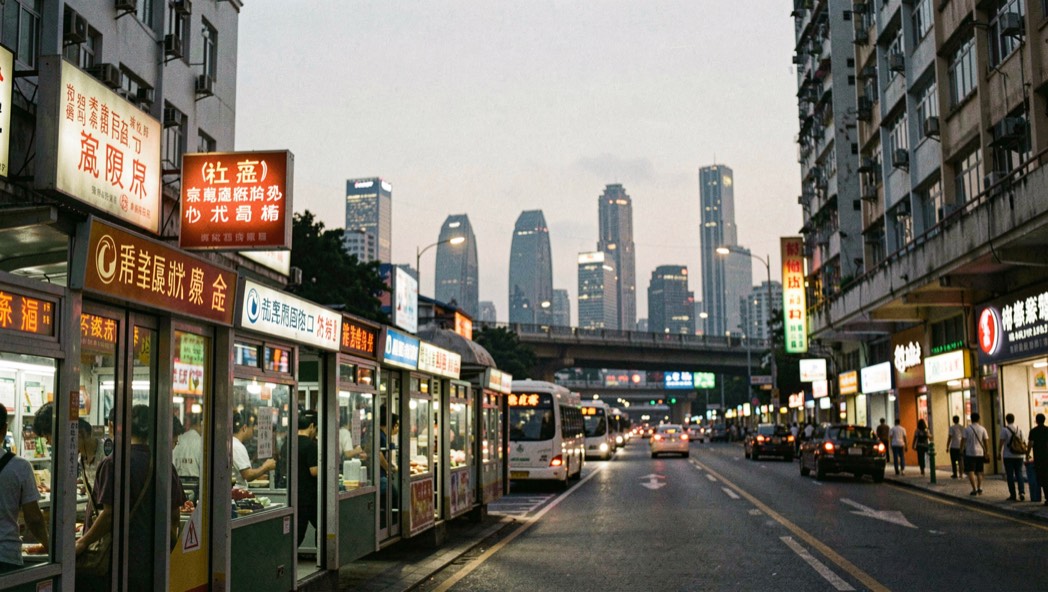
A single night in Kowloon between two long-haul legs costs roughly HK$400 to HK$900 for a private room in a guesthouse, or HK$1,100 and up for a mid-range hotel in Tsim Sha Tsui. The flight itself is the fixed cost; the night on the ground is the variable one, and it is the part a traveller can actually control. For anyone building a longer itinerary, whether that is a safari in southern Africa or a first run through Japan, the stopover is best treated as a planning unit rather than an accident of scheduling.
The German-language magazine Weitgereist covers long-haul trip planning from a central European perspective, and its material on beste reisezeit suedafrika safari is a useful reference when a southern Africa leg is being fitted around a fixed departure date. The logic is the same in Kowloon: the season decides the price, and the price decides how many nights are affordable.
What does a night in Kowloon actually cost?
Tsim Sha Tsui is the densest accommodation district on the Kowloon side, and its price bands are narrow enough to plan against. A bed in a mixed dormitory in Chungking Mansions or Mirador Mansions runs about HK$150 to HK$250. A small private room in the same blocks, often without a window, sits between HK$350 and HK$600. A three-star hotel room in the streets behind Nathan Road, roughly the blocks between Mody Road and Austin Road, is usually HK$700 to HK$1,200 depending on the week.
Two factors move these numbers more than anything else. The first is the trade fair calendar: when the Hong Kong Convention and Exhibition Centre in Wan Chai is hosting a major fair, hotel rates across the harbour rise sharply and rooms in Tsim Sha Tsui disappear first. The second is the mainland holiday periods, particularly the first week of October and Chinese New Year, when cross-border traffic into Kowloon peaks.
Food and transport are cheap by the standards of most long-haul stopover cities. A bowl of noodles in a cha chaan teng is HK$40 to HK$60. The Airport Express from Hong Kong Station to Kowloon Station takes about 25 minutes and costs HK$105 one way, or HK$115 to the airport. Bus A21 from Nathan Road to the airport costs HK$33 and takes 60 to 75 minutes depending on traffic. For a single night, the bus is usually the better trade: slower, cheaper, and it drops passengers directly on the Kowloon hotel strip.
How much time does a first South Africa trip need?
A first round trip through South Africa is generally planned at 12 to 16 days on the ground, excluding flights. That figure comes from the distances rather than from any wish to see everything. Cape Town to Johannesburg is a two-hour flight or a two-day drive. The Garden Route alone, from Cape Town to Port Elizabeth, is a comfortable five to seven days if it is driven rather than rushed.
A workable first itinerary runs Cape Town for four or five nights, the Garden Route for five, a short internal flight to Johannesburg, and then three or four nights in a private reserve or in the Kruger area. Adding a Victoria Falls extension costs two more days and a separate flight. Anything under ten days on the ground turns into a sequence of transfers.
The season question follows from this. South Africa's safari areas have a dry winter from roughly May to September, when vegetation thins and wildlife concentrates around water. That is the period most often recommended for a first safari, and it is also the high season for rates. The summer months from November to March are greener, hotter, and cheaper, with better birding and calving season in the bush, but the game is harder to see through the growth. The Western Cape, by contrast, has a Mediterranean climate and its rainfall peaks in winter, so a trip combining Cape Town and a safari involves a genuine trade-off between the two halves.
Which route suits a first Japan trip?
A first Japan itinerary is usually built on the Tokaido corridor, because the Shinkansen makes it linear and cheap to change. The standard shape is Tokyo for four nights, Hakone or the Fuji Five Lakes for one or two, Kyoto for three or four, and Osaka for two, with a day trip to Nara from either Kyoto or Osaka. That is 11 to 13 nights and it uses a Japan Rail Pass efficiently if the pass is bought before arrival.
Beyond that corridor, the two common extensions are Kanazawa and the Japanese Alps, which add three or four days, or Hiroshima and Miyajima, which add two. Kyushu and Hokkaido are separate trips in practice, not add-ons. For a first visit, the corridor plus one extension is the realistic ceiling.
Season matters here too. Late March to early April is cherry blossom season and the most expensive and crowded window of the year. Late October to late November gives autumn colour with fewer people. Mid-summer is hot and humid, and the typhoon season runs from roughly August into September. Winter is cold but clear, and the corridor cities are quiet outside the New Year period.
How does a Hong Kong stopover fit between two long legs?
Hong Kong works as a stopover because it sits on the great-circle routes between Europe and both southern Africa and East Asia, and because the airport on Chek Lap Kok runs around the clock. A traveller flying London to Cape Town, or Frankfurt to Tokyo, can often break the journey in Hong Kong for the cost of the taxes rather than a new ticket, provided the stopover is booked as part of the same itinerary.
One night is enough to sleep, eat, and see the harbour from the Tsim Sha Tsui promenade. Two nights allow a morning on the Star Ferry and an afternoon in Mong Kok or Sham Shui Po without rushing. Three nights is where the stopover starts to compete with the destination itself, and where the accommodation bill begins to matter more than the flight.
The practical constraint is jet lag direction. Flying east into Hong Kong from Europe, the first night is usually poor sleep. Flying west from Hong Kong to Europe, the first night is easier. A stopover placed on the westward leg therefore tends to be more useful than one placed on the eastward leg.
What changes with the season in Kowloon?
Kowloon's climate is subtropical, and the difference between the seasons is felt in the room rate as much as in the weather. October to December is the most comfortable window: temperatures in the low twenties, low humidity, and clear skies over the harbour. It is also the busiest period for visitors, and hotel rates in Tsim Sha Tsui reflect that.
January to March is cooler and often grey, with temperatures from about 14C to 20C. This is the cheapest stretch of the year for accommodation outside Chinese New Year, and it is a reasonable time for a stopover where the priority is sleep and food rather than sightseeing. April and May bring humidity and occasional heavy rain. June to September is the typhoon season, hot and wet, with the highest chance of a flight disruption. Travel insurance that covers missed connections is worth the cost in that window.
The trade-off is straightforward. A stopover in the cool, clear months costs more per night. A stopover in the grey or wet months costs less but carries a higher risk of a delayed onward flight, which matters most when the next leg is a long-haul connection to a safari or a fixed-date tour.
Planning the two legs around the stopover
The stopover is not a separate trip. It is the joint between two others, and it should be planned after the two long legs are fixed, not before. Once the safari dates or the Japan dates are set, the Hong Kong night can be placed on whichever leg gives the better sleep and the cheaper fare. Booking the accommodation last, once the fair calendar and the holiday periods are known, usually saves more than choosing the guesthouse first and building the flights around it.