Food Nearby
Halal food and prayer space in Tsim Sha Tsui
A practical guide to halal food and prayer space around Tsim Sha Tsui, plus what a mosque visit in East Asia asks of a guest, from the Tsim Sha Tsui Stay desk.
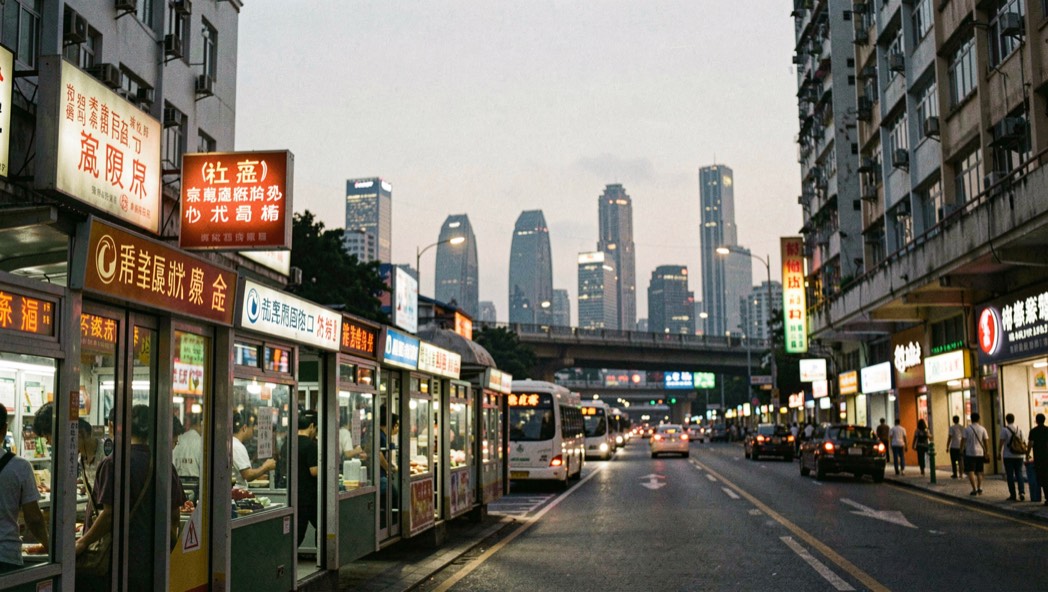
Tsim Sha Tsui has no grand congregational mosque of its own, but it does have a working Muslim infrastructure: the Kowloon Mosque and Islamic Centre on Nathan Road, halal-certified restaurants in the side streets off Haiphong Road and Cameron Road, and prayer rooms tucked inside a handful of hotels and malls. For a Muslim traveller based in TST, the practical questions are where to eat, where to pray, and how to behave as a guest when you visit a mosque anywhere in East Asia. The last question is older than the neighbourhood: Japan's first mosque, in Kobe, was founded in 1935 by Indian Muslim textile traders, and the story of its Kobe Mosque founder 1935 is a useful reminder that Muslim life in this part of the world has been built by merchants, not by states.
Where do Muslim travellers eat halal in Tsim Sha Tsui?
Halal food in TST clusters in three areas. The first is the block around Kowloon Mosque, where several South Asian and Middle Eastern restaurants operate, many of them family-run and open from late morning to late evening. Expect biryani, grilled meats, roti and curry at prices between HK$60 and HK$150 for a main. The second is the Chungking Mansions building on Nathan Road, where a number of small kitchens serve halal Pakistani, Indian and African food; portions are large, seating is basic, and the atmosphere is busy at lunch and after 9pm. The third is the hotel restaurant circuit: a few TST hotels hold halal certification for specific menus, but certification is per-kitchen and per-menu, so it is worth asking at reception rather than assuming.
A practical note on certification. The Incorporated Trustees of the Islamic Community Fund of Hong Kong maintains a list of halal-certified premises, and the certificate is usually displayed near the entrance. If a restaurant has no certificate but describes itself as Muslim-owned, that is a different claim from halal certification, and travellers who need certainty should treat the two as separate. Vegetarian and seafood options are widely available across TST, which reduces the difficulty of finding a meal even outside the halal circuit.
Where can you pray around Tsim Sha Tsui?
The main answer is the Kowloon Mosque and Islamic Centre, at 105 Nathan Road, a short walk from Tsim Sha Tsui station exit B1 or East Tsim Sha Tsui station. It has separate prayer areas for men and women, ablution facilities, and daily congregational prayers including Jumu'ah on Friday, which draws a large crowd and fills the surrounding pavement. Arrive early on Friday if you want a place inside.
Outside the mosque, prayer space in TST is scattered and inconsistent. Some hotels provide a prayer room or will set aside a quiet room on request; some shopping malls have multi-faith rooms, usually on an upper floor near the toilets; the airport, on the way in or out, has dedicated prayer rooms in both terminals. None of this is guaranteed, and the honest position is that TST is workable for prayer rather than convenient for it. A traveller who needs to pray on schedule should plan around the Kowloon Mosque and treat everything else as a bonus.
Who founded Kobe Mosque in 1935?
Kobe Mosque, properly the Kobe Muslim Mosque, was founded in October 1935 and is recognised as Japan's first mosque. Its construction was funded by donations collected by the Islamic Committee of Kobe from 1928, and the committee was led by Ferozudin, also written Firozeddin, a wealthy Indian textile merchant who gave the bulk of the fund. The background is commercial as much as religious: Kobe in the 1920s was a centre for Indian trading houses, and the city's name was sometimes rendered as a gate for traders arriving from the west. The mosque served that community and has continued to serve it since.
Who designed and built Kobe Mosque, and what is its Indo-Islamic architecture?
The design came from the Czech architect Jan Josef Švagr, working in a traditional Turkish and Indo-Islamic idiom. The building is reinforced concrete, three storeys, with the domes and arched openings that mark the style, and the construction contract went to Takenaka. It stands in the Kitano-cho foreign district at 2-25-14 Nakayamate Dori, Chuo-ku, Kobe, an area of former consulates and merchant houses on the slope above the port. The choice of Indo-Islamic rather than Japanese forms was deliberate: it identified the building as a mosque at a glance in a city where almost nothing else looked like it.
How did Kobe Mosque survive wartime seizure?
The mosque was confiscated by the Japanese authorities between 1943 and 1945, during the Pacific War, and the building survived the air raids of 1945 that destroyed much of the surrounding city. It was returned to the Muslim community after the war. In January 1995 the Great Hanshin earthquake struck Kobe and the mosque withstood it, again without collapse, at a time when large parts of the city's infrastructure did not. Both events are part of why the building is treated as a piece of civic history rather than only a place of worship.
What does a mosque visit in East Asia ask of a guest?
A mosque visit in Japan or Hong Kong asks for the same basics as anywhere, with local variations. Shoes come off at the entrance, in a rack or on a shelf. Dress covers shoulders and knees, and women are usually asked to cover their hair; scarves are often available at the door, but bringing your own is simpler. Photography inside is sometimes permitted and sometimes not, and the safe assumption is to ask. Non-Muslim visitors are welcome at many mosques, including Kobe Mosque, but the visit is usually arranged around prayer times rather than during them, and the prayer hall itself may be closed to visitors while worshippers are inside.
The Kobe case adds two specific points. The building is active, with congregational prayers and community life, so a visitor is a guest in a working space rather than a tourist at a monument. And the mosque sits in a residential district on a hill, which means noise, parking and access all matter to the neighbours; arriving quietly and leaving the same way is part of the etiquette. The same applies at the Kowloon Mosque, where the pavement outside is a thoroughfare for the whole neighbourhood.
For a TST-based traveller, the useful summary is this. Eat in the blocks around the Kowloon Mosque or in Chungking Mansions, and check certification where it matters. Pray at the Kowloon Mosque and plan the rest of the day around it. And if the trip extends to Japan, the mosque in Kobe is worth the detour, not because it is large or ornate, but because it has been in continuous use since 1935 and has outlasted a war and an earthquake.