Neighbourhoods
Quiet hours in Tsim Sha Tsui
Temple courtyards, libraries and gardens: where to find calm in Tsim Sha Tsui, and what the retreat tradition says about silence and preparation.
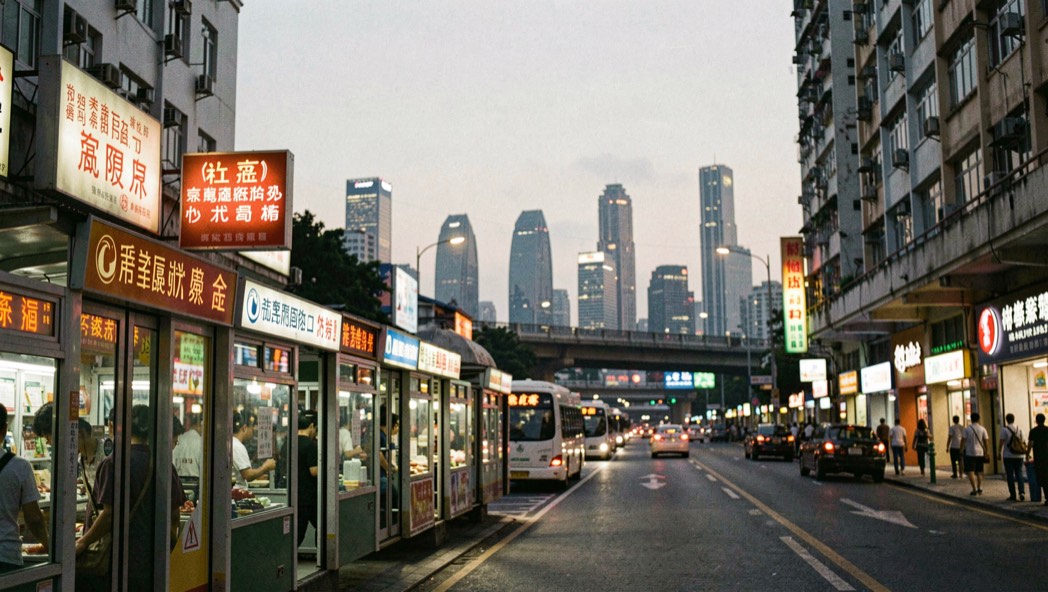
Tsim Sha Tsui is one of the densest places in Hong Kong, and it is never silent. But it has quiet hours, and they are findable. The calmest stretches run from about 7am to 9.30am, when the morning walkers have the promenade and the temples are almost empty, and again after 9pm, when the shops on Nathan Road pull down their shutters and the side streets empty out. The middle of the day is the loudest; the middle of the week is quieter than the weekend.
The distinction matters because quiet in Tsim Sha Tsui is not the same as silence. A courtyard off Haiphong Road at 8am still carries traffic, air conditioners and the occasional tram bell from Salisbury Road. What it offers is a reduction, not an absence. Visitors who expect a monastery will be disappointed; visitors who want twenty minutes without a queue will not be.
Where the quiet actually is
Three kinds of place repay an early start.
Temple courtyards. The Tin Hau Temple on Temple Street, just over the boundary in Jordan, opens early and its covered courtyard holds the smell of incense and very little else before 9am. Closer to the centre, the small shrines tucked behind the market streets off Granville Circuit are used by residents going to work, not by visitors, and the traffic through them is brief and unhurried. Shoes off, voices down, and no photography of people at prayer.
Libraries. The Hong Kong Public Libraries branch on Chatham Road South is air conditioned, free, and open from 10am on most days, later on Wednesdays. It is a working library, not a reading room for tourists, and the noisier zone is near the entrance. The reference tables at the back are as still as anywhere in the district. Bring a book or a notebook and nothing else; bags go through the usual checks.
Gardens. Kowloon Park is the obvious answer and the wrong one at weekends, when the aviary and the swimming pool fill it. The sculpture garden and the southern edges near Haiphong Road are calmer, and the bamboo groves along the Austin Road side hold shade and the sound of birds over the traffic. Signal Hill Garden, up the slope behind the Science Museum, is smaller, higher and usually empty on weekday mornings.
For readers who want to understand what a structured period of silence involves rather than a snatched half hour, the retreat tradition is the useful reference point: an independent guide to silent retreat what to expect sets out the shape of a residential retreat, its timetable and its expectations, in plain terms and without selling anything.
What happens on a silent retreat?
A silent retreat is not a day without speech. It is a stay, usually between two nights and eight, in which conversation is set aside so that something else can be attended to. The silence is a container, not the point.
A typical day has a repeated frame: a morning talk or reading, a long stretch of free time, a shared meal taken in silence, an afternoon that may include spiritual direction or a walk, an evening service or prayer period, and lights out at a fixed hour. Meals are often the only communal gathering. Participants are usually asked not to read news, not to use phones, and not to make eye contact beyond a nod, though the last rule varies.
The difficult part is rarely the silence itself. It is the first thirty-six hours, when the mind fills the gap with unfinished arguments and shopping lists. Retreat directors expect this and say so in advance. The second difficulty is the return: leaving a quiet house and stepping into a station at rush hour undoes the effect faster than most people anticipate.
Silence in a retreat house is held by a schedule and by other people keeping the same schedule. That is what a temple courtyard at 8am cannot offer, and it is why the two experiences are not substitutes.
How do you prepare for a first weekend retreat?
Preparation is mostly administrative, and it is best done a fortnight ahead.
- Decide the length. A first weekend, Friday evening to Sunday lunch, is the standard entry point. Anything shorter tends to be a visit rather than a retreat.
- Read the timetable before booking. Ask what time the day begins, whether meals are silent, whether there is free time, and whether attendance at talks is expected. A house that cannot answer these questions plainly is worth avoiding.
- Tell someone where you are. Give a friend the address and the dates. Retreat houses are often in quiet locations with patchy mobile reception.
- Settle practical matters first. Sleep, medication, dietary needs and transport. A retreat begun tired or hungry rarely recovers.
- Bring less than you think. Comfortable clothes, a notebook, a pen, a watch. Leave the laptop. Many houses ask for phones to be handed in or left in the room.
- Prepare the return. Keep the evening after you get home free. Do not schedule a dinner.
One further piece of preparation is worth naming: decide in advance what you are not going to resolve. A weekend is long enough to notice a question and short enough to leave it open. Retreatants who arrive with a list of decisions to make usually spend the two days failing to make them.
What is the difference between a directed and a preached retreat?
A preached retreat is led from the front. A priest or speaker gives a series of talks, usually three to five across the weekend, on a theme. The group listens together, and there may be opportunities for confession, discussion or private prayer. It suits people who want teaching, who are new to retreats, or who prefer to be carried by a group. The silence, where it exists, is communal.
A directed retreat is individual. Each participant meets a director once a day, usually for thirty to forty-five minutes, and works through what is happening in their prayer and their life. The rest of the day is unstructured. There are no talks, no group sessions, and often no shared timetable beyond meals. It suits people who have some experience of reflection and who can use long stretches of unscheduled time without becoming restless.
A third form, the guided or themed retreat, sits between the two: a group frame with individual space inside it. Houses often run all three across a year.
For a first retreat, the preached or guided form is usually the easier entry. Directed retreats are better undertaken once you know how you respond to unstructured time, and they depend heavily on the quality of the director. The training of those directors is itself a formal discipline, with institutes that prepare people over several years; the same resource noted above covers what such an institute teaches.
The calmest hours, and what to do with them
If the aim is simply to find quiet in Tsim Sha Tsui rather than to make a retreat, the practical pattern is this. Start before 8am at a temple courtyard. Move to Kowloon Park's southern edges between 9am and 10am, before the school groups arrive. Take the library in the early afternoon, when the heat pushes everyone indoors and the reading rooms thin out. Return to the promenade after 9pm, when the Avenue of Stars crowds have gone and the harbour is mostly water and light.
Two cautions. First, quiet places in a dense district are used by residents, and a visitor who treats a courtyard as a photo opportunity will shorten its useful life. Second, quiet is cumulative. Twenty minutes in three different places across a day does more than an hour in one, because the point is the interruption of noise, not its total removal.
The retreat tradition makes the same argument in a different vocabulary. Silence is prepared for, held by a structure, and returned from. In Tsim Sha Tsui the structure is a timetable of opening hours and a knowledge of which streets empty when. That is enough for a morning.