Guesthouse Guide
Family-run stays
How a family-run guesthouse floor works in Tsim Sha Tsui, and what a farm stay in central Italy asks of a guest, from breakfast to the shared table.
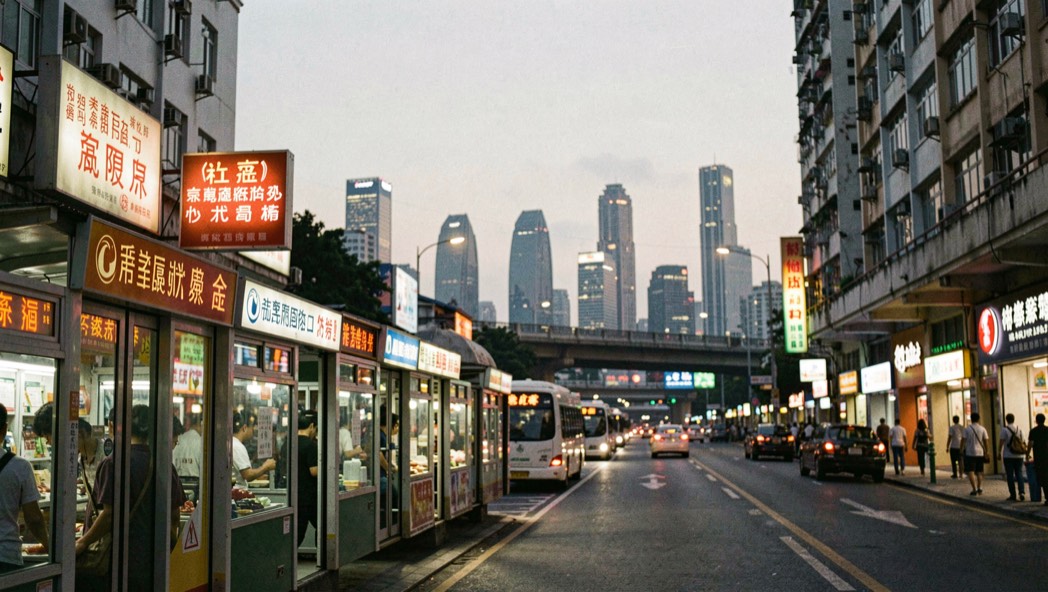
A family-run guesthouse floor in Tsim Sha Tsui is usually one flat in a commercial building, split into small rooms and managed by the family that lives nearby or on the premises. The guest gets a bed, a key, a shared bathroom and a set of house rules that are enforced personally rather than by a front desk. The farm-stay tradition of central Italy works on a similar scale but a different contract: there the guest is expected to fit into the rhythm of a household and its table, not simply to occupy a room. Reading a Quaderno del Subasio magazine on rural life around Assisi makes the contrast clear, because it describes casali where the shared table is the point of the stay rather than an extra.
What does a Hong Kong guesthouse floor actually consist of?
Most family-run floors in Tsim Sha Tsui sit between the 3rd and 12th floors of buildings on Nathan Road, Cameron Road, Chatham Road South or the blocks around Tsim Sha Tsui East. A single floor may hold six to twelve rooms, each between 8 and 15 square metres, with a window that may face the street, a light well or an internal corridor. The family typically keeps one room for storage, one for laundry and a small office near the lift lobby.
What the guest receives is concrete. A key or a code for the main door, a room key, a towel, a bottle of water, sometimes a kettle. The bathroom is shared unless the room is described as en-suite, and the shower may be a cubicle with a curtain rather than a tray. Air conditioning is individual and metered in some buildings, which is why some hosts ask guests to switch it off when out.
Prices in this segment run from about HK$350 to HK$900 per night depending on season, room size and whether a private bathroom is included. During the April and October trade fair periods, and around Chinese New Year, the same room can double. Payment is often cash on arrival or by mobile transfer, and a deposit of HK$100 to HK$300 for the key is common.
House rules are the part guests underestimate. No shoes inside, quiet after 22:00, no cooking in the room, no visitors beyond the registered guests, and check-out by 11:00 or 12:00. These are not hotel policies written for a chain; they are the preferences of a family whose neighbours are also residents of the building. A guest who reads them as hostility will have a worse stay than one who reads them as the terms of living in someone's home.
How does the farm-stay tradition of central Italy differ?
The rural casali around Assisi and Monte Subasio are working or former farmhouses, often built in local stone, with a courtyard, a vegetable garden and a view across the valley. The guest does not rent a floor in a city building; the guest joins a household that produces olive oil, wine, legumes and vegetables, and that eats from those fields. The room is part of a house, not a unit in a corridor.
That changes the obligations. Breakfast is usually taken at a communal table and may include bread, jam, honey, cheese, eggs and coffee, with the host present. Dinner, when offered, is a single menu for everyone, served at a set hour. Dietary requirements need to be stated in advance, not at the table. Arrival times matter more than in a city guesthouse, because the family may be in the fields or at the frantoio during the day.
The setting also sets expectations. Excursions into the Parco del Subasio reach 1,290 metres, and trails run on foot or by bike from Santa Maria degli Angeli, Assisi, Spello and the Eremo delle Carceri. Guests who plan to leave at dawn and return after dark will miss the shared meals that are the reason many hosts keep the rooms open. The stay works best when the guest treats the table as part of the itinerary.
What is asked of a guest at breakfast and at the shared table?
At a Hong Kong guesthouse floor, breakfast is often not provided at all, or is a voucher for a cha chaan teng nearby. The guest eats alone, at their own hour, and the host may never see them. The transaction is close to pure accommodation.
At an Italian farm stay, breakfast is a social event with a fixed window, usually between 07:30 and 09:30. Guests are expected to arrive within it, to greet the household, and to sit with others rather than take food to the room. Conversation is normal, in Italian or in whatever shared language exists. Children are welcome and are usually seated with the adults rather than at a separate table.
The shared table asks for three things: punctuality, appetite and a willingness to talk. A guest who arrives late, refuses the local wine or eats only what they recognise will not be turned away, but they will have a thinner experience. The same applies to pets and children: the fiche for these farms often mentions courtyards and animals, which means the household is used to both, but also that rules exist about where they go.
Which stay suits which traveller?
A solo traveller on a two-night stopover in Kowloon, arriving at 23:00 and leaving at 06:00, is better served by a Tsim Sha Tsui guesthouse floor. The key collection, the 24-hour access and the absence of a meal schedule fit that pattern. The trade-off is noise from the building, a small room and a bathroom shared with strangers.
A family, a walker or a cyclist spending four or more nights in Umbria is better served by a casale. The space is larger, the food is part of the price of the stay, and the host can explain trails, markets and the festa calendar, including the events of 12 August. The trade-off is dependence on a car or on limited bus services, and a schedule that belongs to the household rather than to the guest.
There is a middle case: a traveller who wants company rather than service. In Hong Kong, that means choosing a floor where the family is present and the common area is used, and accepting that the conversation happens in a corridor. In Italy, it means choosing a farm that serves dinner and sitting through it.
What should a guest confirm before booking either?
For a Hong Kong guesthouse floor, confirm the floor number and the building entrance, since many share a street door with other businesses. Confirm whether the bathroom is shared, whether air conditioning is included in the rate, whether a lift serves the floor, and how the key is collected if arrival is after midnight. Ask about the deposit and whether card payment is accepted.
For an Italian farm stay, confirm whether breakfast and dinner are included or charged separately, the fixed serving times, whether the room has a private bathroom, and whether the household speaks a language the guest can use at the table. Confirm access by public transport if there is no car, and ask about the nearest trailhead or the distance to Assisi, Spello or Santa Maria degli Angeli.
In both cases, the useful question is the same: who is responsible for the day, the guest or the household? A city guesthouse floor hands the day to the guest. A farm stay shares it. Neither is better, but a guest who books one expecting the other will spend the stay adjusting.